

If you’ve ever tried to make a household budget before and quietly given up, you’re not alone.
Most budgets don’t fail because people are bad with money. They fail because they’re too rigid, too idealistic, or built around how life should look rather than how it actually does.
A good household budget shouldn’t make you feel restricted or guilty.
It should make day to day decisions easier, reduce money stress and help you feel more in control, even when money feels tight.
This guide walks you through how to create a household budget that fits real life.
What a household budget actually needs to do
A budget isn’t about cutting everything back or tracking every penny forever.
At its core, a household budget has three jobs:
- Show you where your money is really going
- Help you plan without constant worry
- Give you confidence to spend without second guessing
If your budget isn’t doing those things, it’s not working, no matter how neat it looks on paper.
Step 1: understand your real monthly money picture
Before you plan anything, you need a clear view of what comes in.
Start with your household income after tax. That includes wages, benefits, pensions and any regular side income.
If your income changes month to month, don’t use your best month. Use an average or a cautious estimate.
It’s much easier to adjust a budget upwards than to patch holes later.
Step 2: Track spending without overwhelming yourself
This is where many people switch off, so keep it simple.
Start by listing your fixed costs. These are the bills that rarely change:
- Rent or mortgage
- Council tax
- Energy
- Internet and phone
- Insurance
- Childcare
Next, look at flexible spending. Food, fuel, social plans and personal spending.
You don’t need dozens of categories. A rough but realistic picture beats a detailed one you won’t keep up with.
If tracking everything feels like too much, look back at one or two recent months of bank statements instead. Patterns show up quickly.
Step 3: Build a budget that fits how you actually live
This is the most important step.
A budget only works if it reflects your real habits, not your ideal ones.
- If you eat out once a week, plan for it.
- If December is always expensive, accept it.
- If cutting something completely makes you miserable, it probably won’t last.
Some people like clear percentages. Others prefer loose spending limits. There’s no correct method here, only what feels manageable to you.
Step 4: Plan for the stuff that always trips people up
This is where most budgets quietly fall apart.
Annual bills, car repairs, birthdays, school costs and Christmas are all predictable to a degree.
The simplest fix is to set aside small amounts each month for irregular costs. Even modest contributions smooth out the impact and stop surprises turning into stress.
You don’t need a perfect emergency fund straight away. Just acknowledging that things will come up is a strong start.
How to stick to a household budget without feeling restricted
Sticking to a budget isn’t just about discipline. It’s about flexibility.
Some months will go off plan. That doesn’t mean you’ve failed. It means life happened.
Instead of scrapping the budget, adjust it. Move money between categories. Rebalance next month. Treat the budget as something you update, not something you break.
Progress matters more than precision.
A simple monthly budget check in routine
You don’t need to review your budget every day.
Once a month is enough for most households.
Check:
- What felt tight
- What felt easy
- What surprised you
Ignore tiny overspends and focus on trends. If something feels consistently hard, the budget needs changing, not you.
Common budgeting mistakes that don’t look like mistakes
These catch people out all the time:
- Forgetting to budget for fun
- Making categories too detailed
- Not updating after a pay change or bill increase
- Expecting every month to look the same
A budget should adapt as your life changes. If it doesn’t, it becomes frustrating instead of helpful.
Managing your household budget
Once your budget is set, update it regularly.
This gives you a live view of:
- How much disposable income you have left each month
- Where you can trim spending (unused subscriptions, overpriced bills)
- How much you can save or invest
- Whether you need to make cutbacks
Budgets aren’t static, they should adapt as your income, bills, or goals change.
If cutting costs is on your mind, check out savvy shopping secrets for seasonal sales for practical tips.
Tools and government support
If you’d like more structure, try:
- MoneyHelper’s Budget Planner: A free tool that helps you build and manage a plan online.
- Help to Save scheme: If you’re on Universal Credit, the government will boost your savings by up to £1,200 over four years.
- Great British Insulation Scheme: Grants to cut energy costs by improving home efficiency.
These are worth exploring if you’re on a tight budget or facing rising bills.
Smart savings strategies
A household budget is most powerful when paired with small, consistent savings habits:
- Dedicate one hour each week to review finances (cancel unused services, move money into savings)
- Use meal planning and batch cooking to cut food costs
- Switch and compare bills every renewal date—read how to survive a rent increase for managing housing costs
These small wins add up to thousands of pounds over a year.
Managing your household budget
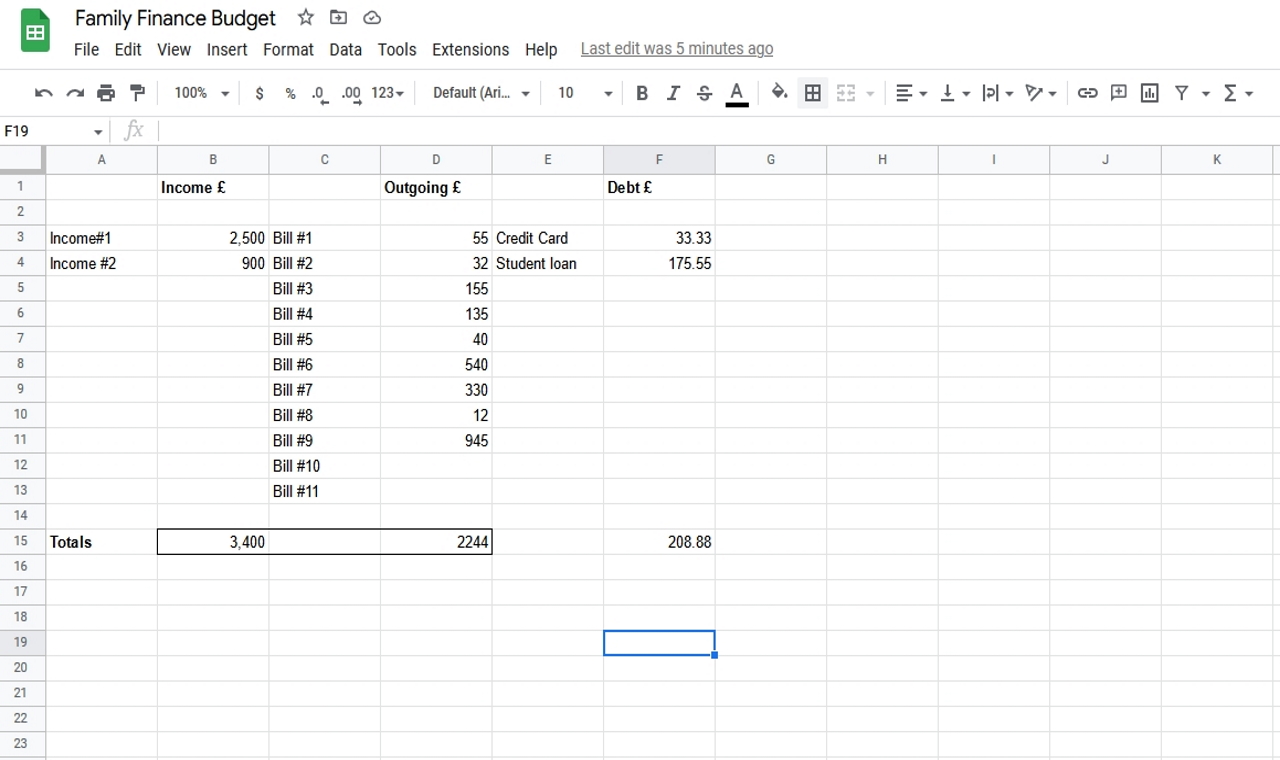
Now you have a basic household budget, you can predict how much money you have left, how much you can put into savings and identify any areas you can cut back.
The budget is flexible, so as entries change, you can add amounts, change rows and keep it so it reflects your current situation.
Once you have the budget in place, your financial situation becomes much clearer. You have a better idea of where you are financially and whether you have space to save or whether you need to make cutbacks.
Either way, you’re making decisions based on data rather than guesswork. That can make a huge difference to what comes next!
Household budgeting FAQs
1. Why is budgeting so important in 2025?
Inflation, higher energy prices, and rising household bills mean money doesn’t stretch as far. A budget gives you control, helping you spot where you can cut back or save.
2. What’s the simplest way to start a budget?
Begin by tracking income and spending for a month. Write it down or use a spreadsheet. From there, look at where money can be saved. Tools like MoneyHelper’s Budget Planner can automate the process.
3. Which budgeting method works best for UK households?
If you like structure, the 50/30/20 rule is simple. If you need discipline, cash stuffing is effective. If savings are your priority, try pay-yourself-first. The “best” method is the one you’ll actually stick with.
4. How do I handle debt within my budget?
List debts by balance and interest rate. Focus on paying down the most expensive first while maintaining minimum payments on the rest. Free advice is available from Citizens Advice and StepChange if debt feels overwhelming.
5. What if I can’t stick to my budget?
Budgets aren’t meant to be perfect. Adjust categories if they’re unrealistic and review monthly. The goal is progress, not perfection, consistent small improvements make a big difference.
