

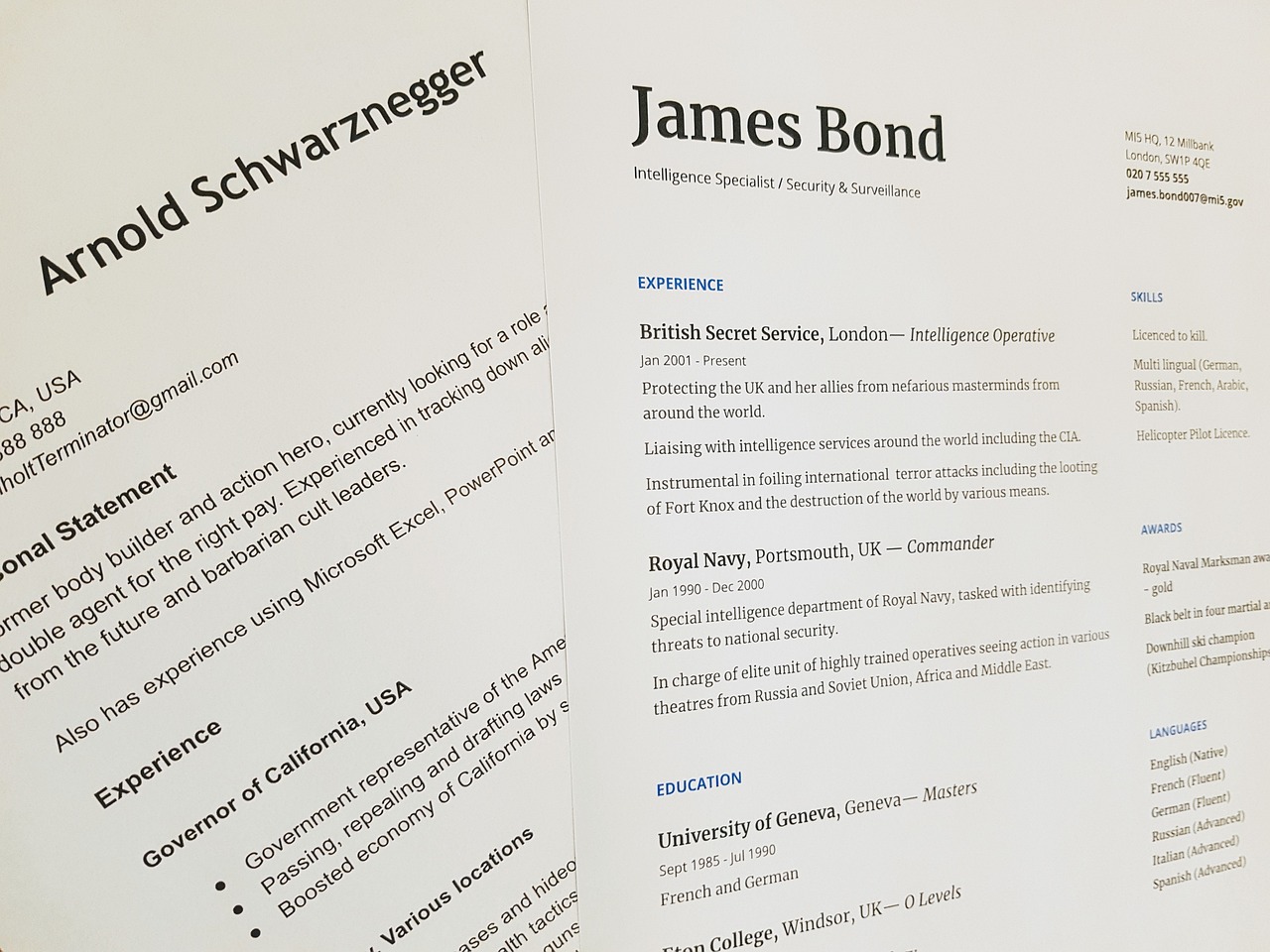
Have you tried to apply for a job online recently? Sent off a CV for a role you were perfect for but didn’t even get a reply? You’re not alone.
Applicant Tracking Systems (ATS) are increasingly doing the first round of filtering in the job market, and they don’t always get it right.
An ATS is a robot CV scanner. Recruiters use them to save time, but for candidates it can feel unfair.
If your CV doesn’t tick the software’s boxes, it might never reach a human recruiter.
The good news is you can work with these systems and improve your odds of getting through.
Why CV honesty matters more than ever
Some jobseekers might be tempted to exaggerate achievements or qualifications to get past an ATS, but many recruiters now use AI-powered checks to verify claims.
At senior levels, employers even pay thousands for background verification. If your CV doesn’t hold up, it can backfire.
Always present your skills truthfully and let examples do the talking.
How to beat the Applicant Tracking System when applying for a job
Like it or loathe it, the Applicant Tracking System is here to stay. That means working within its limitations and figuring out how to make it work in your favour.
Using these tips will help.
Tailor the CV to the job
The most effective way to get past robots is to tailor your CV to every application.
Read the job description carefully, highlight the key words and phrases, and add them naturally to your CV.
For example, if the role asks for “project scheduling” and “content planning,” make sure those exact words appear in your CV alongside your experience.
Tip: Don’t just list buzzwords. Give evidence of how you used each skill.
Example: If the advert says “digital marketing campaign management,” don’t just write “ran marketing campaigns.” Use the same phrase: “Managed digital marketing campaigns across Facebook and Google Ads with a £10k monthly budget.”
Keep CVs simple
Fancy templates with tables, graphics and icons might look good to people, but most ATS can’t read them.
Stick to a single column, standard headings (Work Experience, Education, Skills) and plain text.
Readable fonts like Arial, Calibri or Times New Roman are safest. Avoid handwritten or decorative fonts.
Example: Instead of inserting a bar chart to show “Excel skills: 90%,” write “Advanced Excel: Pivot tables, VLOOKUP, and data modelling.”
Further reading: How to cope financially after losing your job
Use a key skills section
Use a short bulleted list of your most relevant skills. This helps ATS software pick up exact keywords from the job advert.
Be honest and only include skills you actually have. You may have to answer questions on it at an interview!
Add a bullet-point list that mirrors the ad.
Example:
- Project scheduling
- Content editing
- Adobe InDesign
- Budget tracking
If the role lists “content editing” and “budget tracking,” the ATS will spot those keywords.
Use a qualification summary
Qualification summaries are similar to the skills section. They are a bulleted list outlining your key qualifications.
Make sure to match yours as closely as possible with the ad while remaining truthful.
List qualifications in a straightforward way.
Example:
- BA (Hons) Business Management, University of Leeds, 2020
- AAT Level 4 Diploma in Accounting, 2022
This ensures ATS picks them up instead of burying them inside text.
Further reading: How to manage money after being made redundant
Add dates to all roles
Recruiters use dates as deciding factors for applications as they outline how much experience you have in any given role.
Dates also show career progression and highlight any empty spaces. If you have significant gaps, make sure to explain them briefly within the CV to avoid any doubt.
Example: Marketing Executive, XYZ Ltd, Jan 2021 – Aug 2023
Managed social media campaigns across LinkedIn and Instagram, increasing engagement by 40%.
If you have a gap, explain it:
Career break (Sep 2020 – Dec 2020): Volunteered with local food bank during Covid-19.
Use PDF format if you can .doc if not
CV format is minor but important consideration. It is widely thought that a PDF document is the best format for a CV.
However, not all Applicant Tracking Systems can work with PDFs, so make sure to have a Word document version of it.
As most of us will create a CV in Word and save it as a PDF, that should work for most of you.
Read the application carefully to check acceptable formats before sending.
Always follow up an application
Applying for a job is now largely a soulless process but it doesn’t have to be. Machines may do the initial filtering but it’s a human that will make decisions after that.
You’ll probably get an automated acknowledgement of an application telling you when you can expect a response or telling you only successful candidates will get a response.
Ignore that. Give it a few days and follow up with a phone call.
Phone calls are harder to ignore than emails and show a personal touch. Not all recruiters will welcome them but it’s part of the job.
It’s also your livelihood we’re talking about so the more effort you put in, the more you get out.
Combatting AI-powered CV inflation checks
Recruiters are increasingly using AI to spot “inflated” CVs. Software may flag suspiciously vague achievements or inflated job titles.
To avoid this:
- Use accurate job titles.
- Back up achievements with numbers (e.g. “Increased sales by 15% in six months”).
- Focus on real projects that can be referenced.
Example: If you say you’re “fluent in Python,” but your GitHub shows only beginner projects, recruiters may spot the inconsistency. Instead, write: “Intermediate Python: built automation scripts to process weekly sales data.”
Emphasising resilience, adaptability and communication
UK employers report that graduates often lack soft skills such as adaptability, resilience and communication.
ATS systems don’t always account for these, so you need to weave them into your work experience.
Example: “Adapted to remote working during lockdown, coordinating weekly online meetings to maintain client engagement.”
Testing your CV with ATS tools
Before submitting, run your CV through an online ATS checker. Free tools show how well it matches the job description and highlight formatting issues.
You can also copy-paste it into a plain text editor. If it looks messy there, ATS software may struggle to read it.
Customise for job portals
Major UK platforms like Reed, CV-Library and Indeed UK use ATS filters. Tailor your CV to match their job postings.
If a posting calls for “financial forecasting” or “VAT compliance,” mirror that phrasing in your CV if it reflects your experience.
Preparing for AI-driven interviews
Some companies are moving to AI-led video or chatbot interviews. These systems analyse word choice, tone and even facial expressions.
To prepare:
- Practise concise answers to common questions.
- Record yourself to check delivery.
- Focus on clear communication, not over-rehearsed scripts.
Applicant Tracking Systems and job applications
Final thoughts
Applicant Tracking Systems may feel like a barrier, but with the right structure and keywords you can get past the robots and in front of a human.
Keep it simple, keep it truthful, and prepare for both software filters and real-world interviews.
Get your CV past robots FAQs
1. What file format should I use when applying for a job?
Word (.doc or .docx) is safest as all ATS should be able to read it. PDFs preserve formatting but some systems struggle with them. Unless told otherwise, use Word or keep both formats handy.
2. Should I use both acronyms and full terms?
Yes. Some systems search for “VAT” while others recognise “Value Added Tax.” Including both increases your chances of being picked up.
3. How many times should I repeat keywords?
Use keywords naturally in your descriptions, not just in a skills list. One or two mentions per section is usually enough. Don’t overstuff as it looks artificial to humans.
4. Can I use tables or graphics in my CV?
Avoid them. ATS often can’t parse complex formatting. Stick to a clean layout with headings and bullet points. Save creative designs for the portfolio stage.
5. How do I make my CV appeal to both ATS and human recruiters?
Balance keywords with strong storytelling. Use exact phrases from job ads but also demonstrate results (e.g. “Reduced call waiting times by 30%”). That way the ATS recognises relevance and the recruiter sees impact.
