
We live in a society ruled by consumerism. Our economy is built on it and the world around us is obsessed with parting us from our money.
But, if you understand the tricks and can see what’s happening, you can avoid the vast majority of the techniques companies use to try to get us to spend.
Spending some money is inevitable. But if you can control what you spend, where and on what, you retain some control over your destiny.
There are hundreds of tricks companies use to get us to spend more. Here are some of the most common and what you can do to resist them.
Fear of missing out (FOMO)
Scarcity marketing uses psychology against us. We all want a bargain and don’t want to miss out.
Whenever you see messages like “limited time offer” or “while stocks last”, you’re being targeted by FOMO.
It’s especially obvious with digital items, where “while stocks last” makes no sense. It’s just a tactic to push you into buying now instead of thinking twice.
How to resist: Pause before hitting “buy now.” If you didn’t need the item yesterday, you probably don’t need it today.
Related reading: How to manage emotional spending and avoid impulse purchases
Minimum orders for free shipping
Free delivery thresholds are one of the most effective retail tricks. If your basket is £15 and delivery costs £2.95, but you need to spend £20 for free shipping, your brain says “just add something else.”
Suddenly, a £15 spend becomes £20 or more. Retailers profit, and you’ve spent extra.
How to resist: Use tools like supersaverdeliverytool.com to find cheap top-up items, or ask yourself if paying the delivery charge actually saves you more.
Using social proof
Reviews, star ratings, and pop-ups like “Janice from Doncaster just bought X” are all about social proof.
It makes you feel safer buying because “everyone else is doing it.”
How to resist: Rely on independent review sites or Which? instead of retailer-embedded feedback.
Default subscriptions
Have you ever bought a product where the ‘get this delivered every month’ box was ticked? Or where the ‘subscribe to our newsletter’ was checked by default?
That’s another trick companies use.
They count on us either missing the box or wanting to try it out and forgetting to cancel.
There is also the fact many of us will not cancel subscriptions even though we know we don’t use them because it takes effort.
Small things to be sure, but all designed to open our inboxes or wallets to part us from our money.
Essentials at the back of the store
Have you noticed that whenever you go to a supermarket or store, the bread and milk are always right at the back?
That’s another trick.
You have to walk through miles of offers, large sale signs and lots of those aisle end caps with attractive products just to get your basics.
Everything is designed make you spend. You have to walk past hundreds of products to get your essentials then back past hundreds more to pay.
All designed to break down your willpower and get you to spend.
Eye-level = buy-level
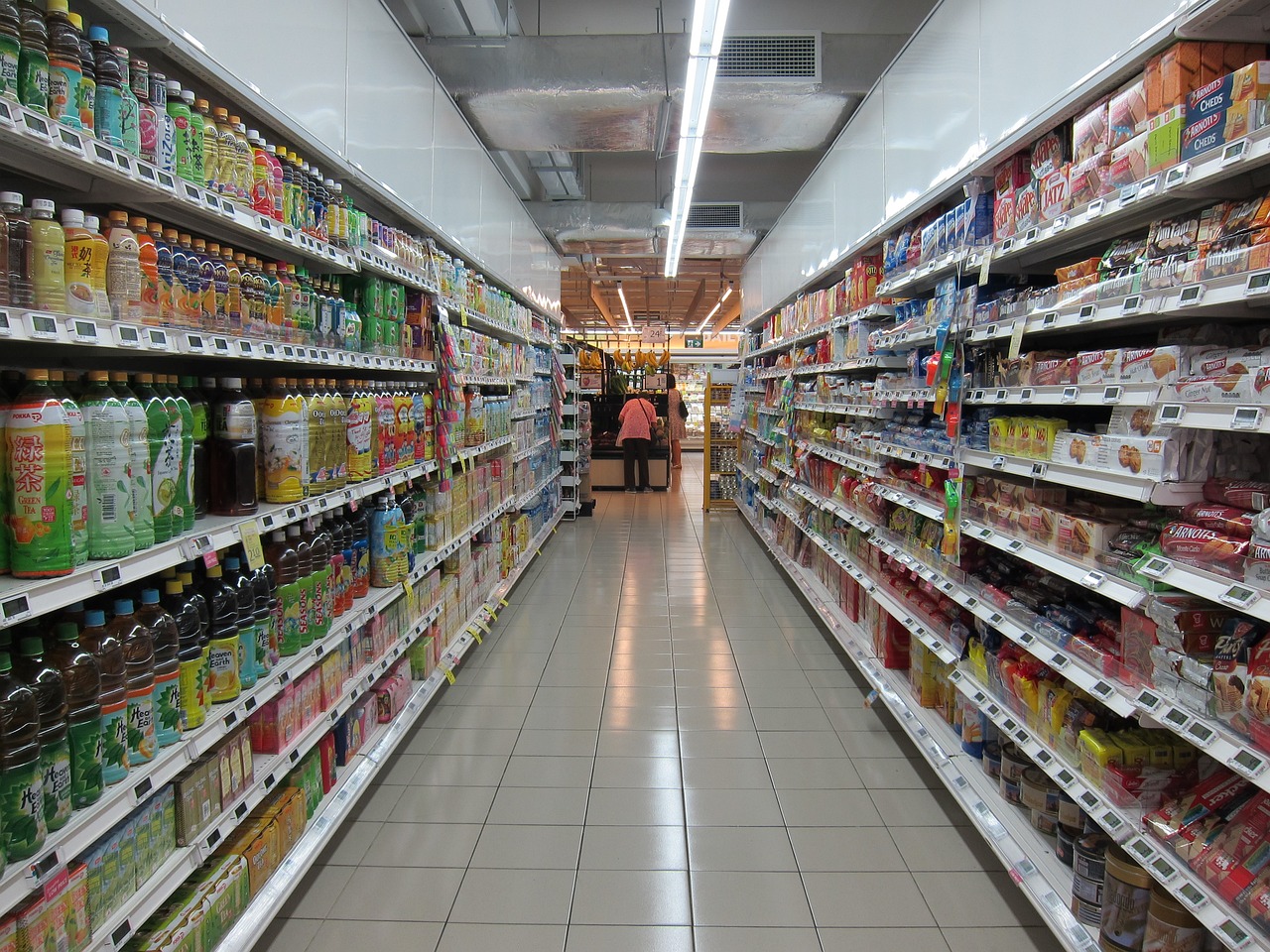
Have you ever heard of the buy level? It’s the products carefully placed at eye level on supermarket aisles.
These are the most profitable products that store sells and they are placed precisely at eye level so they capture our attention. Data tells us we buy more products at eye level, so that’s where you find the most profitable products.
Go down the sweet aisles or where products aimed at kids are and you’ll see the same thing at their eye level too.
Many shoppers are unwilling to bend down or reach up to the cheaper shelves, which is another reason shops love the buy level.
Buy one get one free (BOGOF)
Buy one get one free, or BOGOF, offers make you think you’re getting 50% off, but you rarely are.
BOGOF deals can save money if you were going to buy two of the products anyway. Otherwise, you’re likely losing out.
They make you forget you’re paying full price for the first product and potentially buying a second you don’t need.
Aisle end caps
Aisle end caps are those areas at the end of each aisle that tend to host special offers or related products.
You’ll often see items related to the aisle they are on, at a slightly higher price point. For example, bottle openers or decanters at the end of the wine aisle or saucepans and chopping boards at the end of food aisles.
You may also see special offers or some other kind of inducement.
These are there to capture the buying mood you’re in down the aisle to upsell something related.
It’s a legitimate tactic but is there purely to sell more stuff.
Impulse buys at checkout
Supermarkets are not supposed to put sweets or chocolate close to the checkout anymore, but it’s too good an opportunity to miss.
You’ll always see items close to the checkout to tempt you while you’re waiting. They will often be cheap, low risk items like chewing gum, a bottle of water or something that doesn’t cost much.
The idea is to place something low cost close to your eyeline while you’re waiting around in order to tempt you to buy.
Bulk or multi-item pricing
Have you noticed you now get several package sizes for some items? For example packets of biscuits can now come in several sizes, including multipacks.
It’s the same for chocolate and many other products.
This is partly for convenience but also partly to get you to spend more. If you’re used to buying a 4 pack of Snickers for £1 and see a 3 pack for 80p, you can either think you’re buying the same pack as always or a more convenient smaller pack.
What you don’t always realise is that you end up paying more for that convenience.
I always recommend looking at the weight or unit pricing. It’s in the small print on the price on the shelf.
It’s a legal requirement to display but will almost always be in smaller print.
Always check the unit price before buying large or multipacks. You’ll be surprised at what you find!
I would also recommend doing this for things like milk, fresh fruit juices, ketchup and other products too. Those package sizes change all the time and you’re not always getting a good deal.
You want the lowest price per weight or per unit. Stick to that and you’ll always get the best deal!
New tricks to watch out for in 2025
Retailers constantly adapt. Here are some newer tactics worth being aware of:
- Shrinkflation: Packaging stays the same size, but the contents are smaller. Chocolate bars and crisps are prime examples.
- Dynamic pricing: Prices change depending on demand or browsing history. Airlines and online shops use this heavily.
- Loyalty card offers: Tesco Clubcard and Nectar Prices look like discounts, but often the “discounted” price is the true market value. Read: Everything you need to know about supermarket loyalty cards.
- BNPL at checkout: Buy Now, Pay Later services like Klarna encourage you to spend more than you planned. See our guide: How to properly use 0% credit cards for maximum savings.
Retailer trick FAQs
1. Why do retailers use psychological tricks to make us spend?
Retailers use these tactics because they work. By appealing to our emotions, fear, excitement, or convenience, they can influence us to spend more without realising it. These tricks aren’t illegal, but they can lead to overspending if you’re not aware of them.
2. How can I spot shrinkflation when shopping?
Check the unit price (price per 100g, kg, or litre) rather than just looking at the packet size. UK law requires supermarkets to display this, often in small print on shelf labels.
3. Are loyalty card prices always worth it?
Not always. Loyalty discounts sometimes bring the price down to where it should be anyway. Always compare prices across different supermarkets or use apps like Trolley.co.uk to check.
4. How can I stop impulse buying at the checkout?
Take a shopping list, set a budget, and use mobile payment apps that show you your total in real time. Avoid browsing “extra” aisles if you know you’re prone to adding small items.
5. Is online shopping any safer from these tricks?
Not really. Online retailers use just as many tactics, including countdown timers, “only 3 left in stock” alerts, and automatic subscription checkboxes. Always take a moment before clicking “confirm order.”
